
Daily AI Terms Explained in Simple Words
Artificial Intelligence (AI) is transforming our world at lightning speed, but understanding its complex terminology can feel overwhelming. This guide breaks down essential AI terms in plain, easy-to-understand language, helping you navigate the exciting world of technological innovation.
Machine Learning: Learning Without Direct Programming
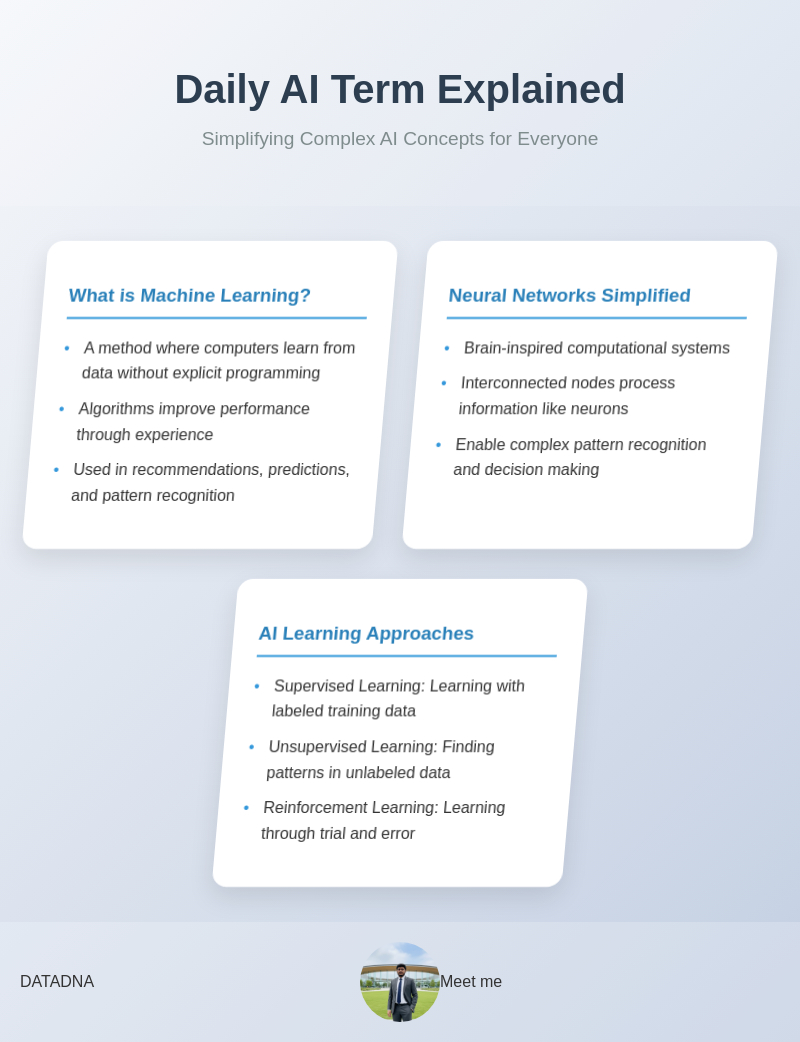
Imagine a computer that can learn and improve by itself, just like humans do. Machine learning is exactly that – a method where algorithms analyze data, recognize patterns, and make decisions with minimal human intervention. It’s like teaching a child to recognize different animals by showing them hundreds of pictures, and eventually, they can identify new animals on their own.
How Machine Learning Works
Machine learning algorithms use statistical techniques to help computers learn from data. They identify patterns, make predictions, and continuously improve their performance. For example, email spam filters use machine learning to recognize and filter out unwanted messages based on previous examples.
Neural Networks: Mimicking the Human Brain
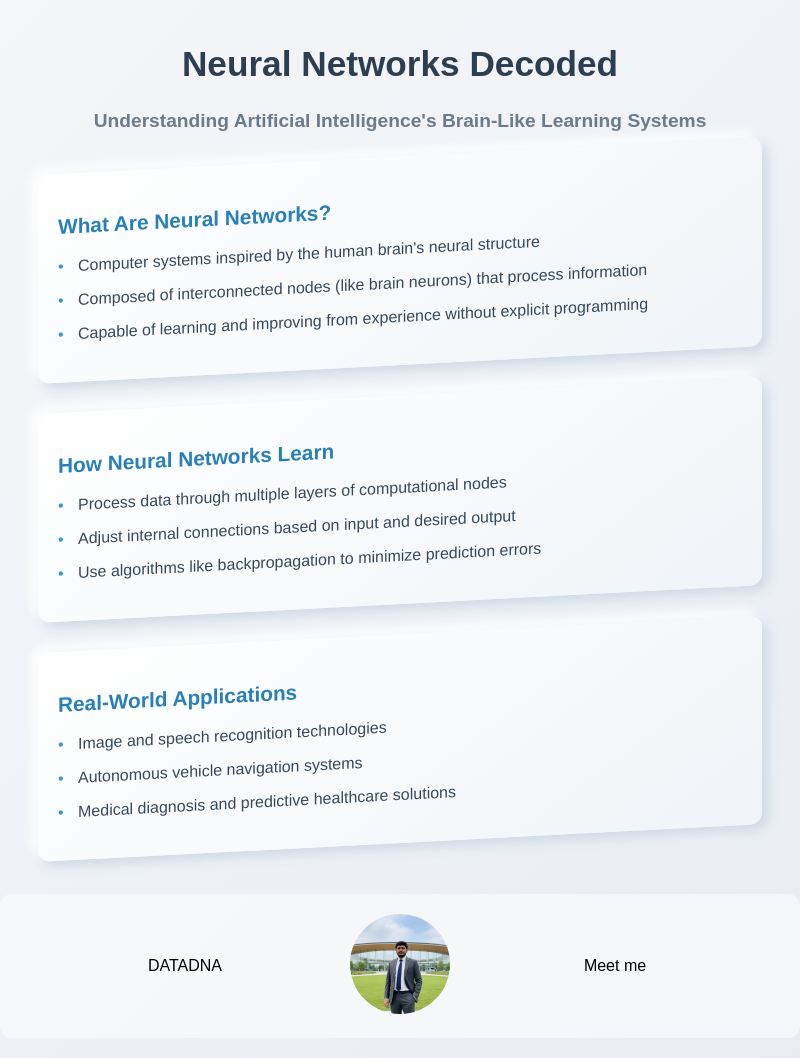
Neural networks are AI systems designed to work similarly to the human brain. They consist of interconnected nodes (like brain neurons) that process and transmit information. These networks can recognize complex patterns, making them powerful tools for tasks like image recognition, language translation, and predicting consumer behavior.
Real-World Neural Network Applications
From facial recognition in smartphone cameras to personalized recommendations on streaming platforms, neural networks are everywhere. They help computers understand and interpret complex data in ways that traditional programming cannot.
Conclusion: The Future is AI
Understanding AI terminology doesn’t have to be complicated. As technology continues to evolve, these concepts will become increasingly integrated into our daily lives. By demystifying these terms, we can better appreciate the incredible potential of artificial intelligence to solve complex problems and create innovative solutions.
Leave a Reply