
Understanding SOLID Principles: The Blueprint for Clean, Maintainable Software Design
In the world of object-oriented programming, writing clean and maintainable code is an art form that goes beyond simply making something work. The SOLID principles provide developers with a comprehensive set of guidelines that transform complex software systems into more understandable, flexible, and scalable architectures.
Single Responsibility Principle (SRP)
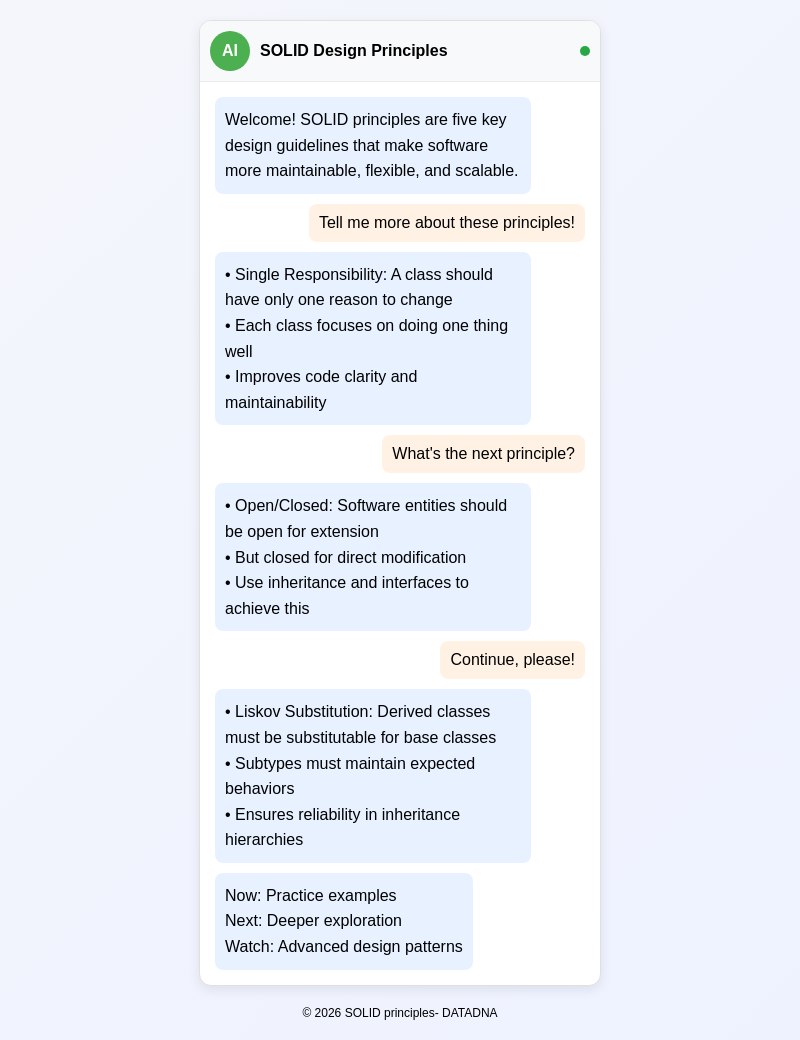
The Single Responsibility Principle states that a class should have only one reason to change. This means each class or module should focus on doing one thing exceptionally well. By keeping responsibilities narrow and focused, we create more modular and easier-to-maintain code that is less prone to unexpected side effects.
Open/Closed Principle (OCP)
The Open/Closed Principle suggests that software entities should be open for extension but closed for modification. This principle encourages developers to design systems where new functionality can be added through inheritance or composition without altering existing code, promoting more robust and adaptable software architectures.
Liskov Substitution Principle (LSP)
Liskov Substitution Principle ensures that derived classes can seamlessly replace their base classes without disrupting the system’s behavior. This principle maintains the integrity of inheritance hierarchies and prevents unexpected runtime errors by guaranteeing that subclasses adhere to the contracts established by their parent classes.

Interface Segregation Principle (ISP)
Interface Segregation Principle advocates for creating smaller, more specific interfaces rather than large, monolithic ones. By breaking down interfaces into precise, focused contracts, developers can reduce unnecessary dependencies and create more modular, flexible code structures that are easier to implement and maintain.
Dependency Inversion Principle (DIP)
The Dependency Inversion Principle recommends that high-level modules should not depend directly on low-level modules. Instead, both should depend on abstractions. This approach reduces tight coupling between components, making systems more modular, testable, and adaptable to changing requirements.
Conclusion: Embracing SOLID Principles
By understanding and implementing SOLID principles, developers can create more resilient, flexible, and maintainable software architectures. These guidelines provide a strategic approach to object-oriented design that transcends specific programming languages and frameworks, offering timeless insights into writing high-quality, scalable code.
Leave a Reply