
Tech Throwbacks: Famous Bugs That Changed Computing
In the world of technology, bugs aren’t just minor glitches—sometimes they’re watershed moments that reshape entire computing landscapes. These unexpected errors have occasionally turned from frustrating setbacks into revolutionary discoveries that transformed how we understand and develop software.

The Infamous Y2K Bug: A Millennium’s Greatest Tech Panic
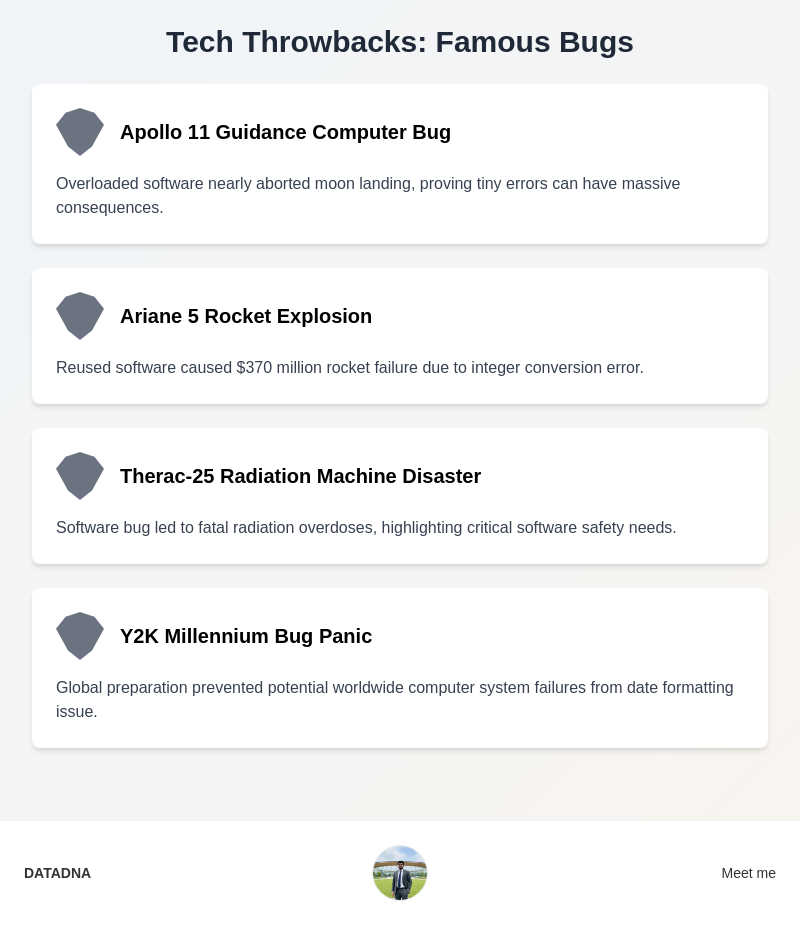
In the late 1990s, the Y2K bug represented a potential global catastrophe. Decades of computer programming had used two-digit year representations, which meant January 1, 2000, could be misinterpreted as January 1, 1900. Governments and corporations spent billions preparing for potential system collapses, from banking networks to power grids.
The Ripple Effect of Shortsighted Programming
What started as a cost-saving measure in early computing—using two-digit year codes to save expensive memory space—became a potential global crisis. The bug highlighted how seemingly minor technical shortcuts could have massive unintended consequences.
The First Computer Bug: A Literal Insect
In 1947, computer pioneer Grace Hopper discovered an actual moth trapped in a Harvard Mark II computer relay, causing a malfunction. This literal “bug” became the origin of the term we now use universally in technology. Hopper carefully taped the moth into the computer’s logbook, marking the first documented computer bug in history.
From Insects to Algorithms: Bug Evolution
What began as a quirky hardware interruption has transformed into a complex field of software debugging. Modern programmers use sophisticated tools and methodologies to prevent and resolve computational errors that could potentially disrupt entire technological ecosystems.
Lessons from Tech’s Greatest Glitches
These historical bugs remind us that technology is an evolving landscape. What seems like a momentary error can become a pivotal moment of learning and innovation. Each bug tells a story of human ingenuity, adaptation, and the relentless pursuit of technological perfection.
Leave a Reply