
How to Stay Focused for Long Study Hours
Studying for extended periods can be challenging, but with the right strategies and mindset, you can maximize your concentration and productivity. Whether you’re preparing for exams, working on a complex project, or trying to improve your learning skills, maintaining focus is crucial to academic success.
Create the Perfect Study Environment
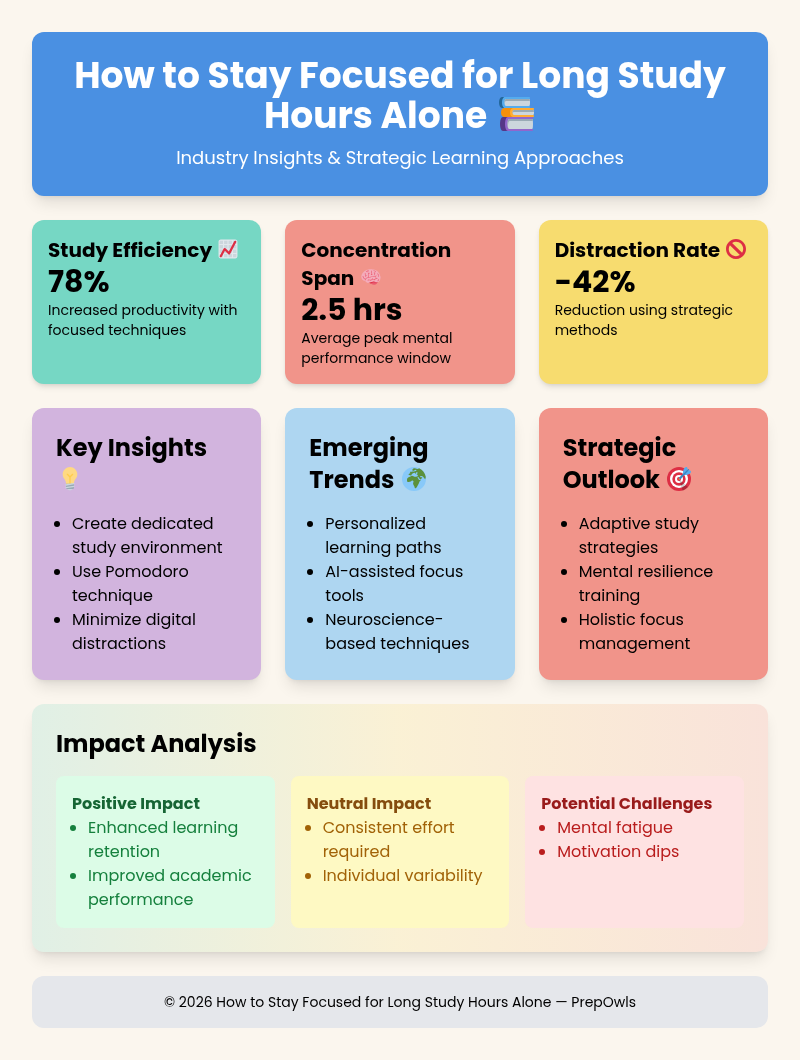
Your study environment plays a critical role in maintaining focus. Choose a quiet, well-lit space with minimal distractions. Ensure your desk is organized, comfortable, and free from clutter. Remove potential interruptions like your smartphone or unnecessary digital devices that might tempt you away from studying.
Time Management Techniques
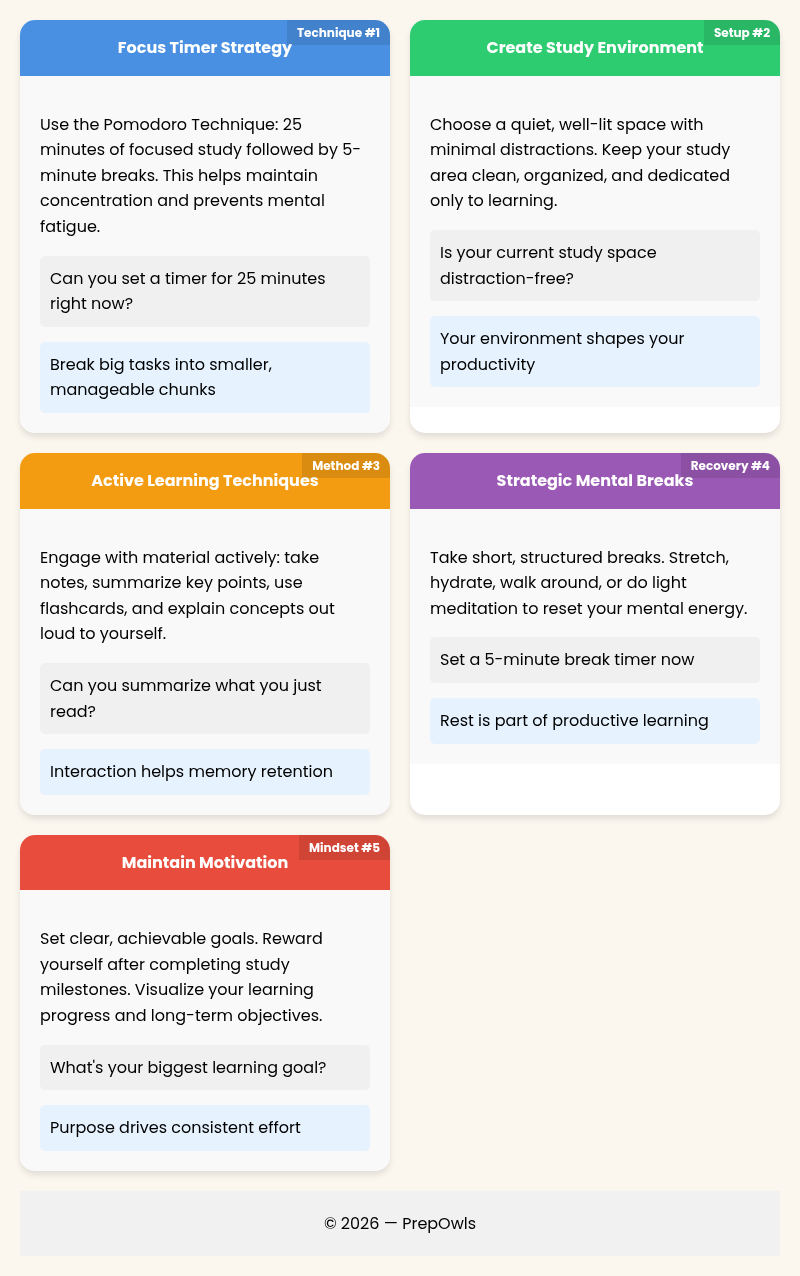
Implement the Pomodoro Technique: study intensely for 25 minutes, then take a 5-minute break. This method helps prevent mental fatigue and keeps your brain engaged. Use a timer to track your study sessions and ensure you’re maintaining a consistent rhythm.
Mental and Physical Preparation
Prioritize your physical and mental well-being. Get adequate sleep, eat nutritious meals, and stay hydrated. Regular exercise and meditation can significantly improve your concentration and cognitive function.
Advanced Focus Strategies
Use active learning techniques like summarizing information, creating mind maps, and teaching concepts to an imaginary audience. These methods enhance understanding and help maintain engagement during long study sessions.
Digital Detox and Mindfulness
Practice digital detox during study hours. Use website blockers, turn off notifications, and create a distraction-free digital environment. Mindfulness techniques like deep breathing can help reset your focus when you feel mentally exhausted.
Conclusion
Staying focused during long study hours is a skill that can be developed with consistent practice and the right strategies. By creating an optimal study environment, managing your time effectively, and taking care of your physical and mental health, you can significantly improve your learning potential and academic performance.
Leave a Reply