
Why Data Quality Matters More Than Algorithms
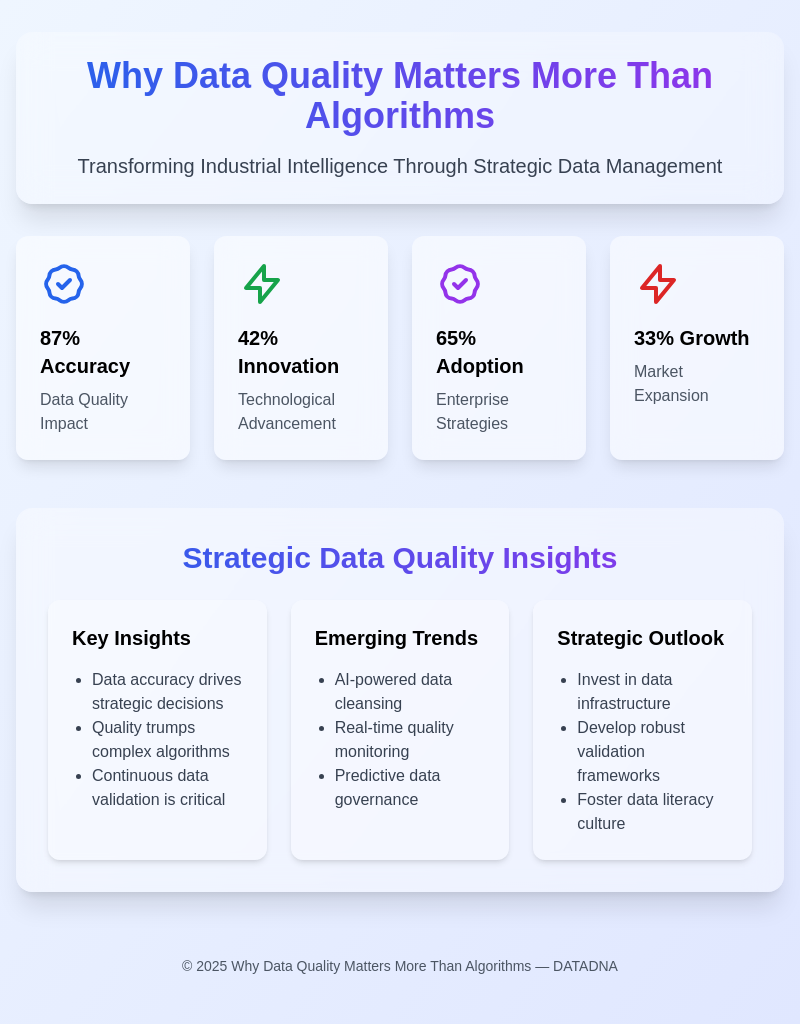
In the rapidly evolving world of data science and artificial intelligence, there’s a critical misconception that complex algorithms are the ultimate solution to business challenges. While sophisticated machine learning models capture significant attention, the foundational element that truly drives meaningful insights is data quality.
The Fundamental Problem: Garbage In, Garbage Out
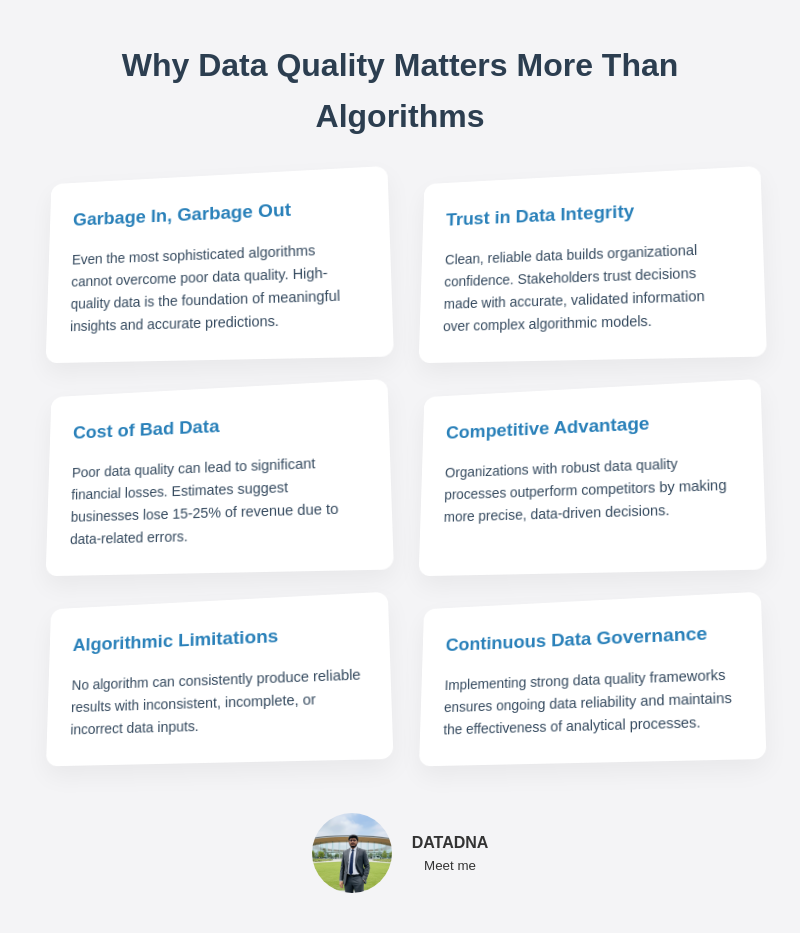
No matter how advanced an algorithm might be, poor quality data will inevitably lead to flawed results. Think of data like the raw ingredients in a gourmet meal—even the most skilled chef cannot create an exceptional dish with subpar materials. High-quality, clean, and accurate data is the essential foundation for any meaningful analytical process.
Key Components of Superior Data Quality
Superior data quality encompasses several critical dimensions: accuracy, completeness, consistency, timeliness, and relevance. Organizations must invest in robust data governance frameworks that ensure these standards are consistently maintained across all data collection and processing stages.
Real-World Impact of Data Quality
Consider industries like healthcare, finance, and e-commerce where a single data point can dramatically influence decision-making. Inaccurate patient records, incorrect financial transactions, or imprecise customer profiles can lead to catastrophic consequences. Algorithms can only interpret and process the data they are given—their effectiveness is entirely dependent on the input’s quality.
Strategies for Ensuring Data Quality
Implementing rigorous data validation processes, continuous monitoring, regular cleansing techniques, and establishing clear data ownership are crucial steps. Organizations must cultivate a culture that prioritizes data quality as a strategic asset rather than treating it as an afterthought.
Conclusion: The Data Quality Imperative
While cutting-edge algorithms and machine learning models are undoubtedly powerful, they are merely tools. The true competitive advantage lies in understanding that data quality is not just a technical requirement but a strategic differentiator. By investing in comprehensive data quality management, organizations can transform raw information into actionable, reliable insights that drive meaningful business outcomes.
Leave a Reply