
The Future of Sustainable Manufacturing: Innovations and Challenges in Green Technology
As the global manufacturing landscape confronts unprecedented environmental challenges, sustainable technology emerges as a critical pathway toward transformative industrial solutions. The intersection of innovation, environmental responsibility, and technological advancement is reshaping how industries approach production, resource management, and ecological impact.
Key Technological Innovations in Green Manufacturing
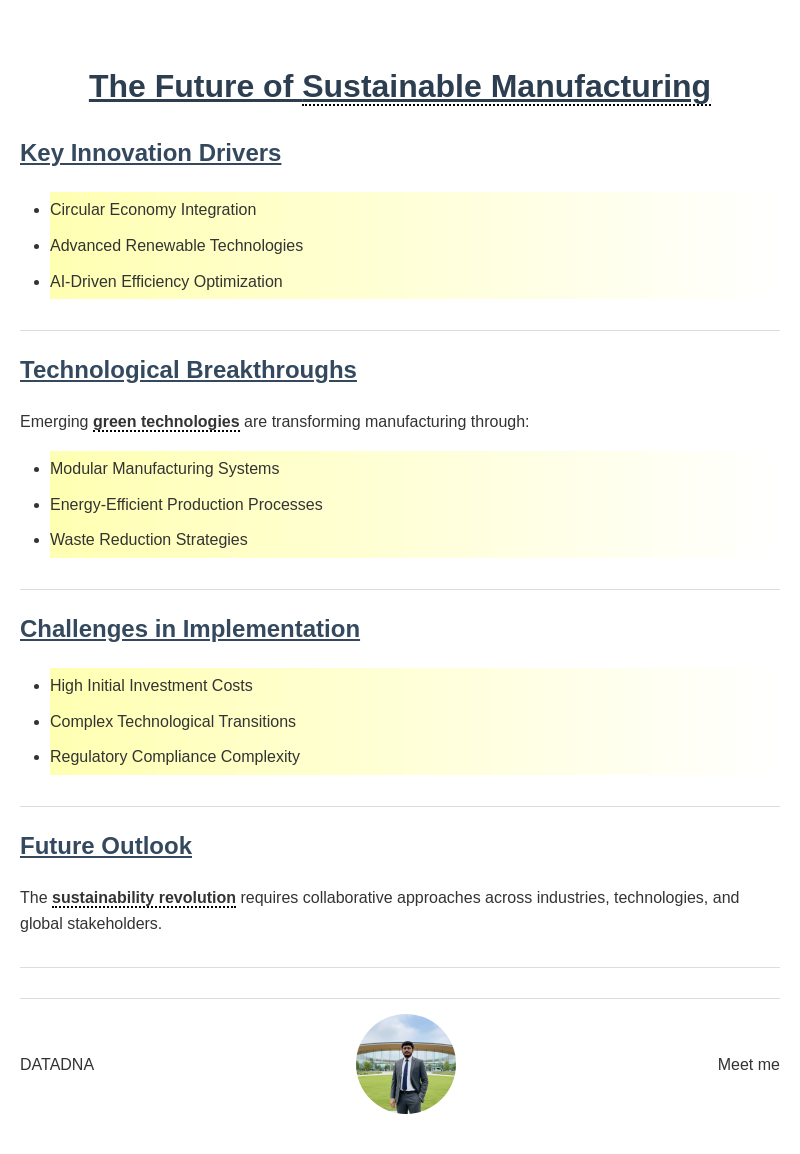
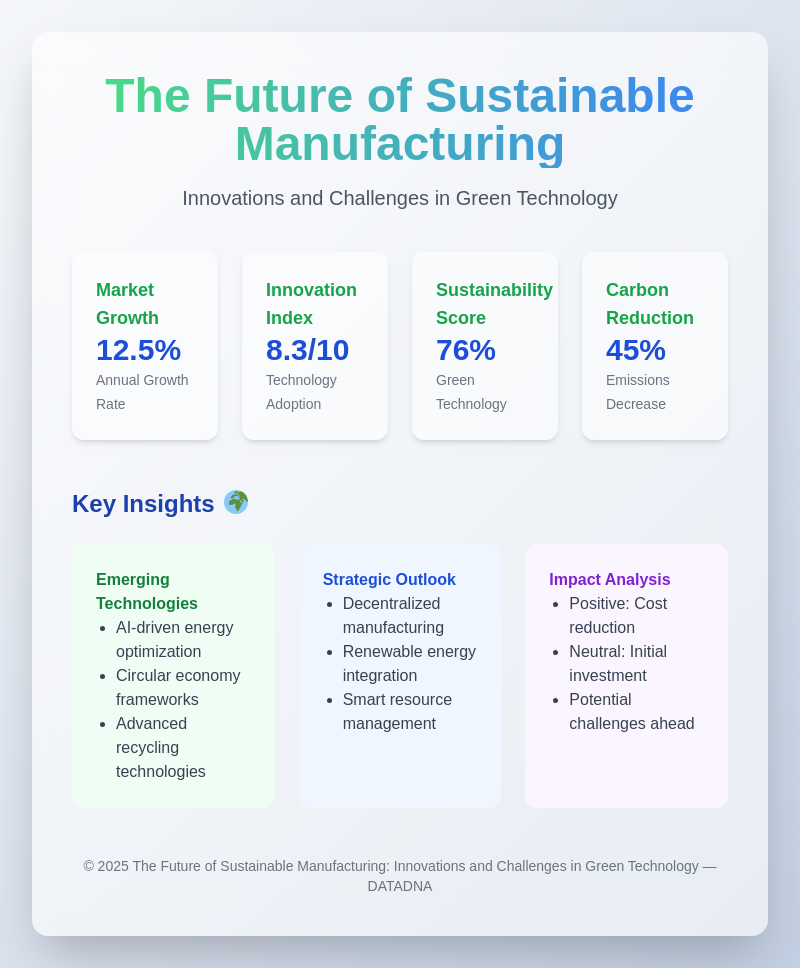
Modern manufacturing is experiencing a revolutionary shift towards sustainable practices. Advanced technologies like artificial intelligence, machine learning, and Internet of Things (IoT) sensors are enabling unprecedented precision in resource optimization. These innovations allow manufacturers to dramatically reduce waste, minimize energy consumption, and create more environmentally responsive production systems.
Circular Economy Integration
The circular economy model represents a fundamental reimagining of industrial processes. Instead of traditional linear production models, manufacturers are now designing products with complete lifecycle considerations, emphasizing recyclability, modular design, and minimal environmental footprint. This approach transforms waste into valuable resources, creating closed-loop systems that dramatically reduce industrial environmental impact.
Renewable Energy and Manufacturing
Renewable energy technologies are transforming manufacturing’s relationship with power consumption. Solar, wind, and advanced battery storage systems are enabling factories to transition from fossil fuel dependency to clean energy ecosystems. This shift not only reduces carbon emissions but also provides long-term economic advantages through reduced energy costs and enhanced operational resilience.
Challenges in Green Manufacturing Transformation
Despite tremendous potential, sustainable manufacturing faces significant implementation challenges. High initial investment costs, technological complexity, and resistance to systemic change represent substantial barriers. Manufacturers must balance economic feasibility with environmental objectives, requiring sophisticated strategic planning and innovative financial models.
Conclusion: A Collaborative Future
The future of sustainable manufacturing depends on collaborative innovation across industries, governments, and technological sectors. By embracing advanced technologies, reimagining production processes, and maintaining a commitment to environmental stewardship, manufacturers can lead the global transition toward a more sustainable industrial ecosystem.
Leave a Reply